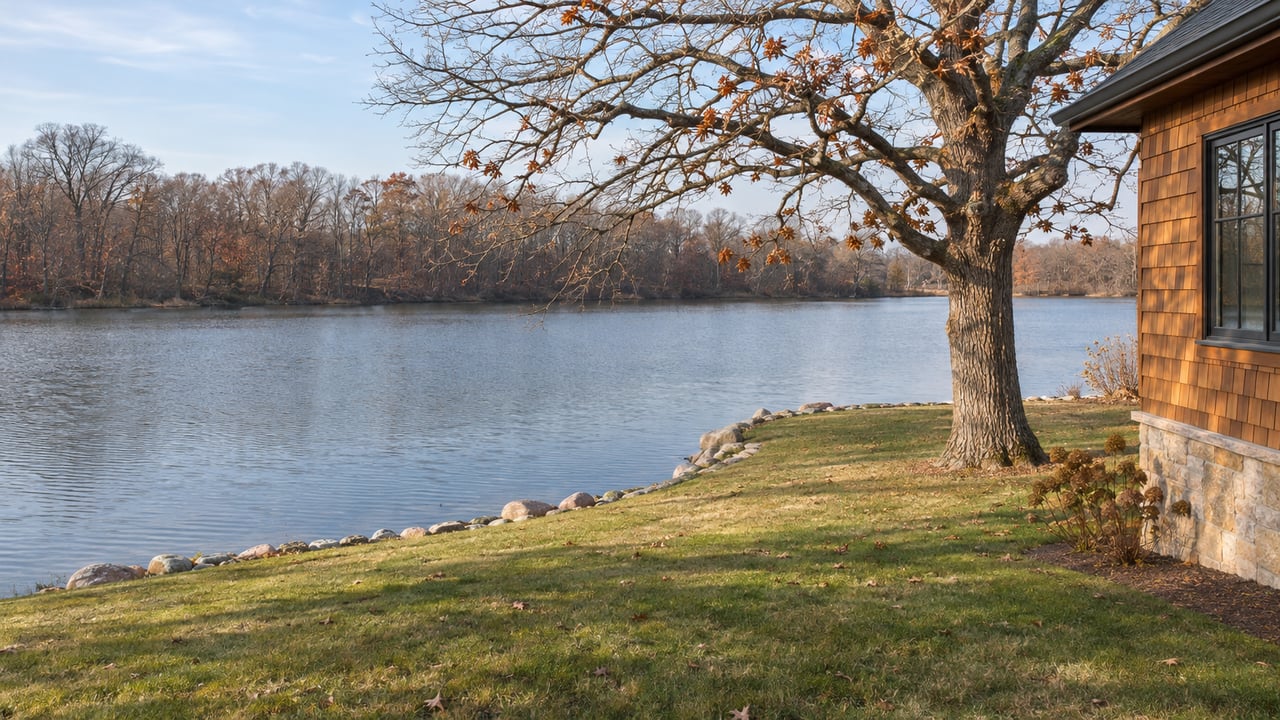
At Lake Panorama, the Septic Report Can Arrive With a Repair List
November 12, 2026
November 12, 2026
Across most of Iowa, a home sale with a septic system needs one thing before the deed can be recorded, and that's a certified inspection report. At Lake Panorama, the county's posted rules add another layer. The Lake Panorama On-Site Wastewater Management District rules that Guthrie County approved in 2012 say every repair point noted in the state inspection report is to be completed, either by the seller or by the buyer if the work isn't done as part of the sale. State law also says it preempts local ordinances on sale inspections, so how that district language is applied to a given sale is a question for Guthrie County Environmental Health.
Read that way, the inspection report works like a work order. If you're listing or buying at the lake this winter, the septic report can carry more weight than most items on the inspection list.
Iowa Code 455B.172 requires a time-of-transfer inspection for any home or building served by a private sewage disposal system, done by an inspector certified by the Iowa Department of Natural Resources. The county recorder won't record the transfer document without that report unless a weather-delay agreement has been filed.
Under the state rule, 567 IAC 69.7, a system that is treating wastewater properly does not have to meet current construction standards. A system that is failing has to be renovated up to current standards. The rule spells out what counts as failing:
The inspector has ten business days to send the full report to the DNR, to the county environmental health department "for review and enforcement of any follow-up mandatory improvements," and to whoever ordered the inspection. For older lake cabins, the tank size and the fixtures connected to the system are the items most likely to decide which side of that line a property lands on.
Lake Panorama's district rules were written knowing the state inspection already existed. Section 2.3(9) of the posted district rules says:
"Because of the scheduled District inspections and repair requirements, all points of repair noted in the State inspection report shall be required to be completed either by the seller, or buyer should the repairs not be done as part of the sale."
The same section says the district provides an official letter describing the system's components, history, condition and required repairs. It also says the county continues to hand out a Contractor Repair Checklist at the time-of-sale inspection, listing suggested repairs "to encourage completion of work that will likely be required at subsequent regular inspections."
The reason is practical. The lake's systems get inspected on a regular schedule after the sale too, so a problem a buyer inherits at closing comes back at the next district visit. Under that language, the question at the table becomes who pays for each listed item, and when.
The state statute says it preempts city and county ordinances governing inspections tied to ownership transfers. The statewide certified inspection is the one the transfer depends on. How the 2012 district language applies alongside it on a particular file is a question for Guthrie County Environmental Health.
The DNR rewrote Chapter 69 in a rule package called ARC 9467C. It was supposed to take effect Sept. 10, 2025. The Legislature's Administrative Rules Review Committee delayed it until the 2026 session adjourned, then on April 13, 2026, added another 70 days. The session adjourned May 3, which put the new rules into effect in mid-July.
The fight was over aerobic treatment units. According to the committee's April 13 minutes, the DNR's Mr. Wicklund said the rewrite drops the old ranking of system types that comes after soil absorption and sand filters. Now any system meeting the national NSF 40 standard is allowed, and he told lawmakers Iowa was the only state that functionally prohibited ATUs. Under the new state chapter, a proprietary system like an ATU can be used when the site can't support soil absorption or an intermittent sand filter. The owner must keep a contract with a manufacturer-certified technician for the life of the system, with inspections at least once a year.
The Lake Panorama district rules on Guthrie County's website are tighter. ATUs are allowed only when the sanitarian finds a site can't take a full-sized soil absorption system, and the rules say septic tank and soil absorption systems should always come first. On new construction, an ATU may be paired only with drip irrigation. The district also calls for quarterly ATU inspections, reports to the sanitarian within ten days, and a maintenance agreement recorded with the County Recorder and in the abstract of title.
That matters most when a sale inspection fails on a small or sloped lot. The state's list of replacement options got longer this summer. Which of those options a lake lot can actually use, and at what ongoing cost, comes from the district and the county sanitarian. A buyer looking at an existing ATU should also expect to see its maintenance agreement during title review.
Winter is when the weather provision comes into play. If weather or another temporary physical condition prevents the inspection, the buyer signs a binding agreement with the administrative authority, which is the DNR or the county board of health, on a DNR form. On DNR form 542-0062, the buyer agrees to have the inspection done by a date written into the agreement and to pay for any modifications it requires. The form leaves that date blank.
That puts the risk on the buyer's side. A seller can close in January with the septic question still open. The buyer takes on an inspection in spring and whatever repairs it finds, and at Lake Panorama the posted district rules call for every repair point to be finished. How a purchase agreement handles that is a question for the buyer, the seller and their attorneys before closing.
A separate DNR binding agreement covers future installation or renovation. It applies when an inspection fails, or when everyone agrees the system won't pass and the buyer chooses to skip the inspection.
Lake Panorama owners already see septic inspectors, which can lead people to think the sale is covered. It isn't. Under the South Panorama Sanitary District maintenance program, all septic systems are fully inspected on four-year cycles, except mechanical systems that are under yearly outside maintenance contracts. Each system is billed $20 a year. Guthrie County says plainly that "these inspection are not time of sale (transfer) inspections."
Not every lake home is on septic, either. The South Panorama Sanitary District's ordinance distinguishes homes connected to its sewer utility from homes using private systems, so whether the time-of-transfer requirement applies is checked one property at a time. Routine upkeep is a separate trade too. The June 2026 Lake Panorama Times ran a feature on Jensen Pumping Service and the rural systems it maintains.
The district's regular inspections create a record that most sellers never look at until a buyer asks. Guthrie County's septic page has an online request form for a copy of a system's septic information. The DNR also keeps a public database of time-of-transfer reports going back to 2021, along with the current forms and an exemption sheet.
If a system needs work, county fees are part of the cost. Guthrie County's posted rate schedule currently lists:
| Service | County fee |
|---|---|
| Time-of-transfer | $300 |
| New septic permit | $225 |
| Major repair permit | $125 |
| Percolation test | $300 |
The county notes those rates can change with approval from the Board of Supervisors and the Board of Health. If a replacement system is needed, scheduling may be easier than it used to be. In August, Raccoon Valley Radio reported that Guthrie County Environmental Health had started analyzing soil from the core samples taken during perc tests. Health Services Director Jotham Arber told the station the change lets them work faster "so we don't have long wait lists for folks that are trying to put in septic systems in our rural areas."
Guthrie County Environmental Health is at 2002 State St. in Guthrie Center, phone 641-747-3972. Mike Stringham is the sanitarian.
Does every transfer need an inspection? No. The DNR's exemption sheet lists transfers to a spouse or lineal relative, transfers between joint tenants or tenants in common, court-ordered conveyances, transfers where the buyer intends to demolish the building, and systems installed within two years before the transfer, among others.
Does a working older system have to be brought up to today's code? Under the state rule, no, as long as it is treating wastewater properly. It has to be upgraded only if it is failing.
Does turning the garage into a bedroom matter? At Lake Panorama, yes. The district counts a garage converted to living space as at least one bedroom, and the system must be enlarged to match.
This post is general information, not legal or financial advice. Confirm how these rules apply to your property and contract with Guthrie County Environmental Health and your attorney.
If a septic report is about to become part of your sale at the lake, Lake Panorama Realty can help you request the district records early, read the repair list with a builder's eye, and keep the winter inspection timeline in front of everyone before closing day. Let's Get in Touch.

A trusted local team delivering professional service, strong market insight, and a seamless experience from search to closing.
CONNECT WITH US

LAKE PANORAMA REALTY
ADDRESS 5370 Chimra Rd Panora, IA 50216