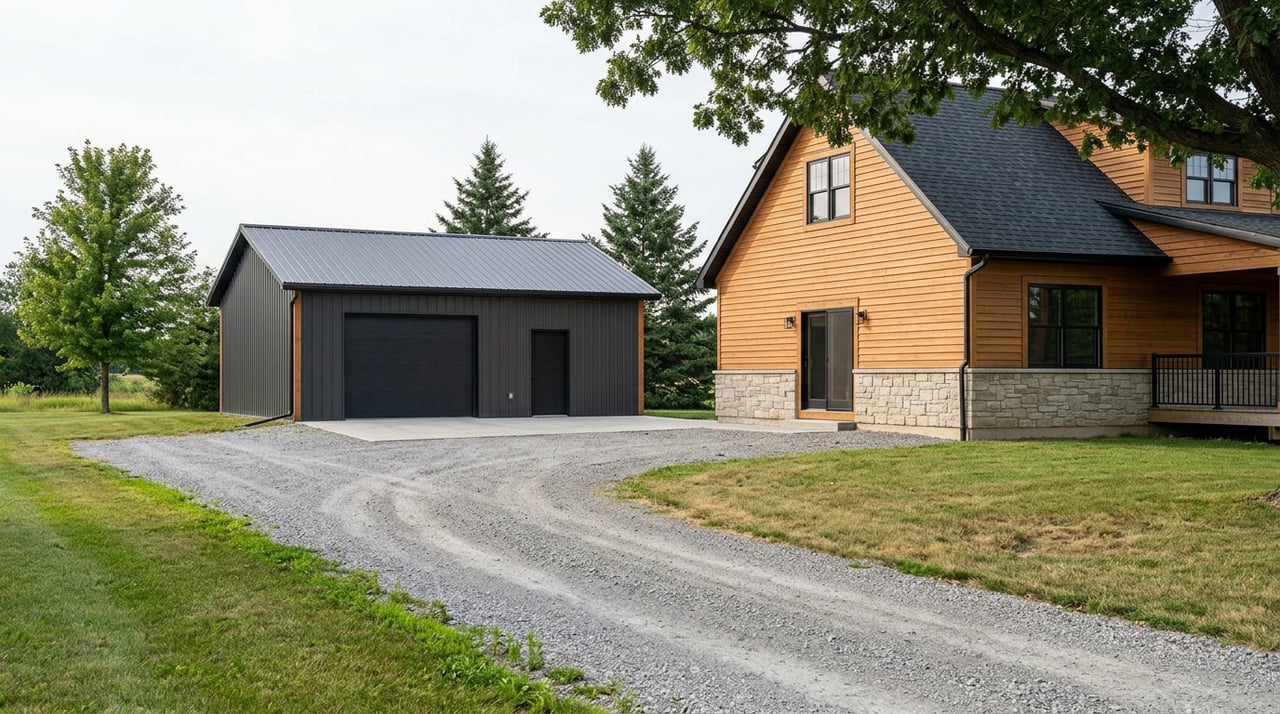
Buying An Acreage in Guthrie County: What To Expect
July 23, 2026
July 23, 2026
Wondering whether buying an acreage or country home in Guthrie County is just like buying a home in town? In many ways, it is not. Rural properties can come with extra steps, different county requirements, and more site-specific systems to review before you close.
If you are considering making a move to a country property in Guthrie County, this guide will help you understand what to expect and what to check first. From septic systems and wells to zoning considerations and property maintenance, knowing the differences can help you make a confident decision. Let’s dive in.
When you buy an acreage or country home in Guthrie County, you are often buying more than just a house and a yard. You may also be buying a private well, a septic system, outbuildings, a longer driveway, and road access that can impact your daily lifestyle.
Rural properties offer space, privacy, and a unique way of living, but they also come with additional features and responsibilities that are important to understand before making an offer.
One of the first questions to answer is whether the property is located within a city or town boundary or in an unincorporated area of Guthrie County. Properties located outside city limits may be subject to county zoning requirements, which can affect what is allowed on the property, including building plans, land use, and future improvements.
In Guthrie County, agricultural uses are exempt from county zoning when the land is actually being used for agricultural purposes. But tracts under 20 acres are presumed not to be primarily agricultural, which matters for many small-to-mid-sized acreages buyers look at near town.
Older farmstead splits can also come with their own rules. In certain agricultural districts, severed farmsteads may be allowed, but the county requires at least 2 acres per dwelling unit along with compliance with water supply and sewage standards.
Access is one of the biggest acreage issues to verify before you make an offer. For residential use in unincorporated Guthrie County, the ordinance requires at least 25 feet of street frontage or a 25-foot-wide private easement or right-of-way to a street.
That means a parcel that looks simple on paper may need a closer look if it is a flag lot, uses a shared drive, or depends on an easement. If access is unclear, it can affect whether the property meets county standards for residential use.
A smart early step is checking the Guthrie County assessor’s Property Search GIS. You can search by deed holder, address, or parcel ID and compare listing details with assessed records.
Many buyers focus first on the home’s condition, but on an acreage, the site matters just as much. The location of sheds, shops, barns, fencing, driveways, and utilities can all affect your plans.
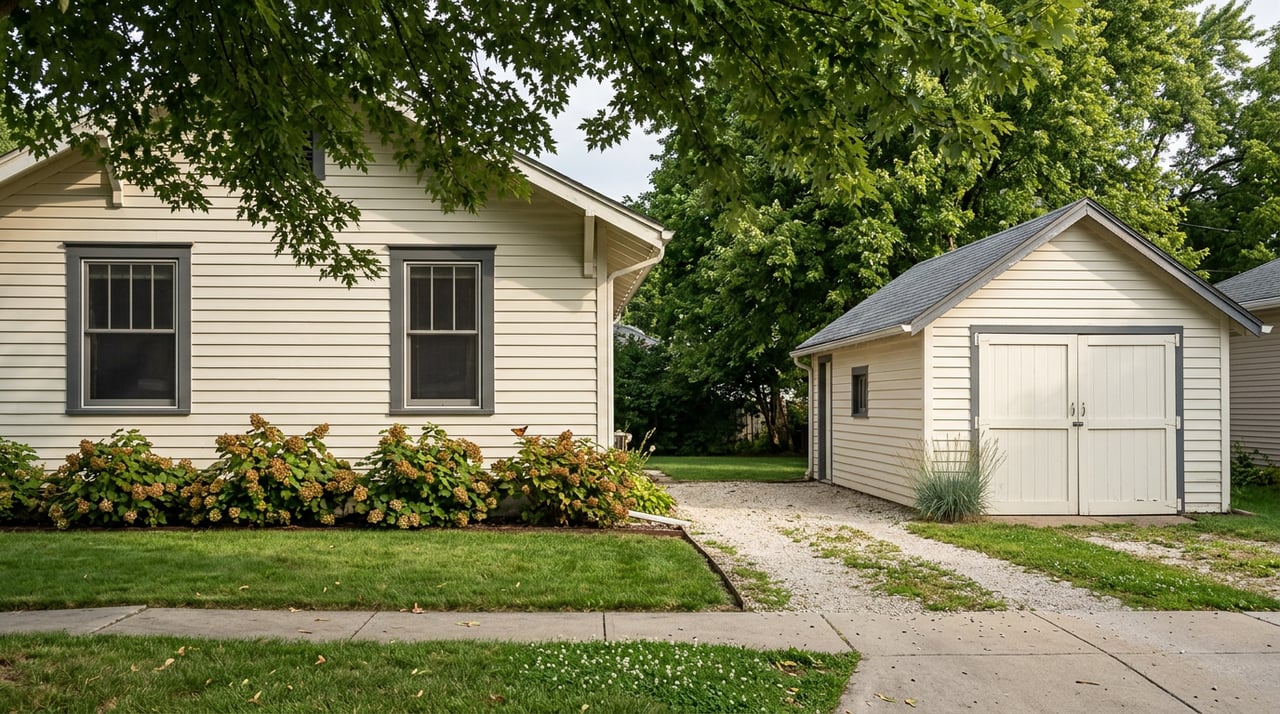
Detached accessory buildings in residential areas are subject to county setback rules. In general, these buildings can be placed in side or rear yards, but they must be at least 4 feet from a property line, stay 8 feet from other buildings, and cannot take up more than 30% of the required rear yard. They also cannot be used as dwellings unless specifically permitted.
Agricultural structures are treated more leniently when the land is actually being used for agricultural purposes. Still, it is worth confirming how the parcel is classified and whether existing buildings fit the applicable rules.
Country living can be peaceful, but it also comes with practical road issues. Guthrie County maintains more than 940 miles of roadway, including 735 miles of gravel roads and 66 miles of dirt roads.
For you, that can mean dust in dry weather, mud during wet periods, and snow access that feels different than living on a paved in-town street. If a property sits on a gravel or dirt road, it helps to think through what that means for your daily routine.
Driveway entrances are another item to check. In Guthrie County, new or widened driveways or entrances require county review and approval before work begins, and the work is performed by the landowner or applicant while county staff inspect for proper construction.
Snow removal also works a little differently in rural areas. The county notes that snow removal operations may leave snow in private drives, and the county is not responsible for clearing those driveways.
Acreages in Guthrie County often rely on private wells. If the property has one, you will want to confirm its condition, testing history, and whether there are any other wells on the site.
The Iowa DNR says private water supply wells require a construction permit, and the work must be done either by a DNR-certified well contractor or by the owner doing the work themselves. The DNR also recommends annual testing for coliform bacteria and nitrates, plus at least one arsenic test during the life of each well.
Well disclosure matters at closing too. Iowa’s Groundwater Hazard Statement requires the transferor to identify wells on the property, including abandoned wells, and abandoned wells must be properly plugged under DNR rules.
This can be more important than many buyers realize. The DNR notes that abandoned wells discovered late can delay a closing and reduce property value.
If the property uses a private sewage disposal system, septic should move to the top of your checklist. In Iowa, the Time of Transfer law requires every home or building served by a private sewage disposal system to be inspected before sale or deed transfer by a DNR-certified inspector.
That inspection is separate from routine maintenance. In other words, even if a system has been maintained, the transfer inspection is still its own required step.
Guthrie County also publishes suggested maintenance intervals by system type. Gravity systems are suggested every 4 to 6 years, pressure distribution systems yearly, sand-filter systems yearly, mound systems yearly, and subsurface drip or aerobic treatment units every 6 months.
If records are available, ask for them early. Maintenance history can give you a better sense of how the system has been cared for and whether future work may be needed.
Radon is worth your attention on any Iowa home, including rural properties. Iowa Health and Human Services considers all of Iowa a high-risk radon area.
Guthrie County’s environmental health office recommends testing and offers radon test kits. Since radon cannot be seen or smelled, testing is the only way to know the level in a home.
Acreage transactions often involve several separate evaluations, not just one general inspection. A home inspection, an appraisal, septic review, well review, and title work all serve different purposes.
That matters because one step does not replace another. The inspection looks at property condition, the appraisal supports the lender’s value review, and septic or well items may require separate specialists.
Title review is especially important on acreage properties. Access easements, recorded boundaries, and other parcel-specific issues can affect how you use the land.
Some rural buyers may consider USDA financing for a primary residence. The USDA Section 502 Guaranteed Loan Program may offer up to 100% financing for qualified borrowers in eligible rural areas.
The program has no set acreage limits, but it cannot be used for income-producing property. Borrowers also must meet USDA income limits, which cannot exceed 115% of median household income.
The key is not to assume a property qualifies just because it is near Guthrie Center. USDA directs buyers to check the exact address for eligibility and work through approved lenders.
Before you move forward on an acreage in Guthrie County, make sure you have answers to these questions:
Buying an acreage in Guthrie County can be incredibly rewarding, but it helps to go in with clear expectations. These properties offer space, flexibility, and a different pace of life, yet they also ask you to pay attention to land use, site systems, access, and county process.
That is where local experience can make a real difference. When you work with a team that knows Guthrie County, understands rural property questions, and can help you spot issues early, the process usually feels much more manageable.
If you are thinking about buying an acreage in Guthrie County, Lake Panorama Realty can help you navigate the details with practical, local guidance.
A trusted local team delivering professional service, strong market insight, and a seamless experience from search to closing.
CONNECT WITH US
LAKE PANORAMA REALTY
ADDRESS 5370 Chimra Rd Panora, IA 50216